
Pitztal Glacier has opened the 2026/27 season: early conditions and new prices
The first Gletscherexpress train left today at 07:00. The Pitztal Glacier opened the 2026/27 season on schedule on 26 September, the first glacier ski area in Austria to do so this autumn. It is a modest start: two pistes, 2.5 km, and skiing at the top only until 13:00. After a summer like this one, that is still more than anyone could have expected.


Neighbouring Kaunertal had also planned to open on 26 September, but five days earlier the operator postponed the opening because of persistently high temperatures. No new date has been given yet. As of 26 September, Sölden and Hintertux are still closed; Hintertux expects to open at the end of the month.
Elsewhere in the Alps, skiing was already under way at Passo dello Stelvio, which resumed on 4 September after a break in August, and at Maso Corto on the Val Senales Glacier, where the season began on 19 September. We have collected the opening dates of the other resorts in our article Austrian glaciers 2026: when the snow will fall and when the resorts open.
The Pitztal Glacier owes this start to its altitude, since nowhere in Austria can you ski higher than here, and to snow stored over the summer. I have been to Pitztal many times and always come back to the same conclusion: this is a glacier that wins on altitude, not on size.
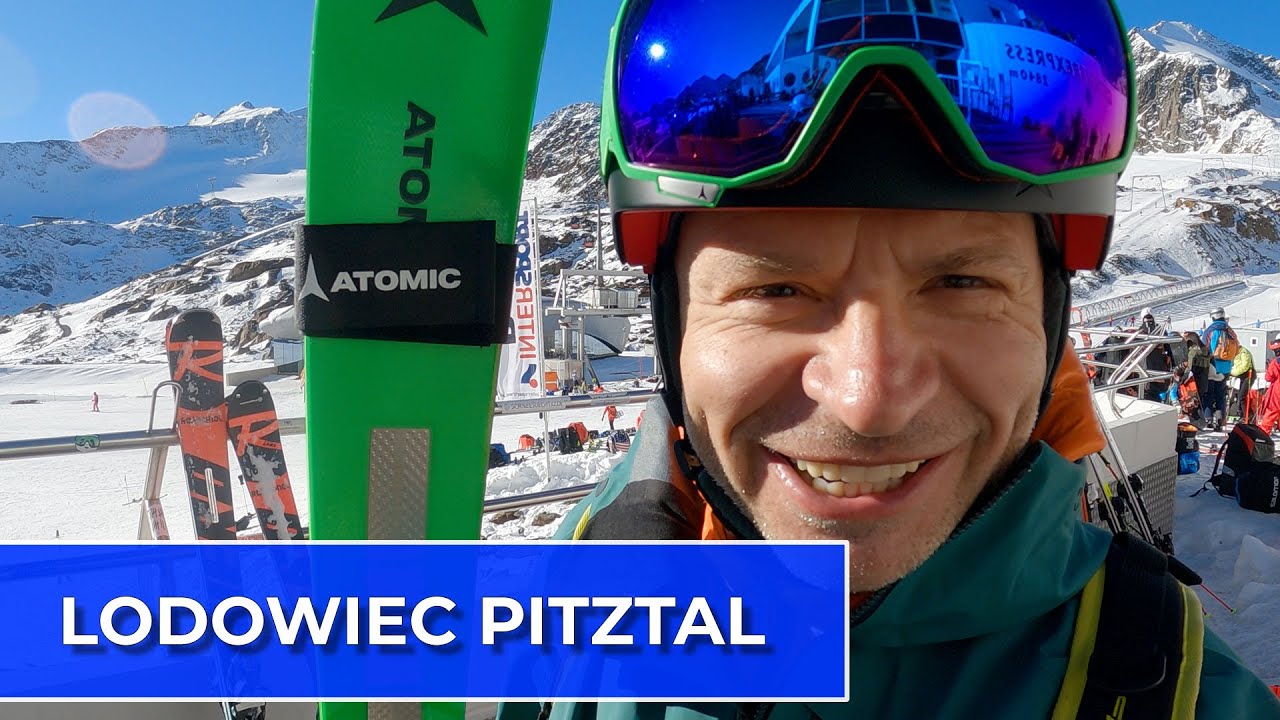
What are conditions like on the Pitztal Glacier?
This is a start for those who want to make their first turns rather than spend a full day on skis. Pistes 26 and 29 are open, about 2.5 km in total. The Gletscherexpress, an underground funicular, takes you up from Mittelberg (1,740 m) to around 2,840 m, followed by the Wildspitzbahn, the highest cable car in Austria. Skiing at the Wildspitzbahn ends at 13:00.
Natural snow is in very short supply. The measuring station at Café 3440 shows 5 cm of snow cover after the last snowfall of around 15 cm, while at the top station of the Gletscherexpress and in the valley the reading is zero. The pistes have been prepared mainly from snow stored in depots over the summer, topped up with machine-made snow.
The GeoSphere Austria forecast shows no precipitation up to and including Tuesday: sunshine, clear skies, 5 to 12°C in the valley. Expect a hard surface in the morning; the snow will start to soften around midday. So it is best to be on the first ride up and to have freshly sharpened edges.
Training groups have already arrived on the glacier, and in autumn Pitztal is regularly used by racers and national teams. Some pistes are often closed for slalom training at this time, and you have to accept that there will not be much free space for recreational skiers.
Pitztal prices 2026/27: how much is a ski pass?
The price list applies from the first day of the season and there is no separate, cheaper autumn rate. A day on the glacier costs €77 for an adult at the ticket office, €65 for a youth and €46 for a child. Every Pitztal Glacier ski pass also covers the Rifflsee ski area, which opens on 12 December.
| Ski pass (ticket office) | Adults | Youth | Children |
|---|---|---|---|
| from 14:00 | 45 € | 38 € | 27 € |
| from 13:00 | 55 € | 47 € | 33 € |
| from 11:00 | 65 € | 55 € | 39 € |
| 1 day | 77 € | 65 € | 46 € |
| 2 in 3 days | 152 € | 129 € | 91 € |
| 3 in 4 days | 228 € | 194 € | 137 € |
| 6 in 7 days | 410 € | 349 € | 246 € |
| 14 in 16 days | 644 € | 547 € | 386 € |
| extension day* | 63 € | 54 € | 38 € |
*One-off extension, for ski passes valid for at least 5 days. Source: official Pitztaler Gletscherbahn price list, as of 26 September 2026.
Age groups are set by year of birth: adults are those born in 2006 or earlier, youth 2007 to 2011, children 2012 to 2018. Children born in 2019 or later ski free; you pay only a €2 handling fee for the card.
Compared with last season, the one-day ski pass has gone up by €2 (from 75 to 77, or 2.7%) and the six-day pass by €22 (from 388 to 410, or 5.7%). The TOP 4 season pass rose the most: from €870 to €957, up 10%. Afternoon tickets, on the other hand, are cheaper. A ticket from 14:00 now costs €45 instead of €55, and one from 13:00 €55 instead of €60. In winter, when the lifts run until 16:00, this is an interesting option for anyone driving in from Imst or from the other end of Tyrol. At the opening it does not help much, because skiing at the Wildspitzbahn ends at 13:00, and the full €77 buys roughly six hours on two pistes.
Ski passes bought online in the Pitztaler Gletscher shop are up to 30% cheaper than at the ticket office. The price is dynamic and rises as the date approaches, so it is better to buy a few days before the trip than in the car park that morning. From the 2 in 3 days pass upwards, one day can be used on the Kaunertal Glacier, in Fendels or at the Hochzeiger ski area once it opens in December. From the same threshold the ticket also covers the Dorflift in Mandarfen.
For a family of two adults and two children born between 2012 and 2018, six-day ski passes bought at the ticket office cost €1,312 in total (2 × 410 + 2 × 246). If one of the children was born in 2019 or later, they ski free and the bill drops to €1,066.
Compared with the large resorts mentioned here, the Pitztal increase is not among the highest, and the ski pass itself is cheaper, although it covers a smaller area. The Sölden ski pass costs €84.50 a day in the main season and €469 for six days, and the six-day pass there has gone up by 8.4%. In Ischgl a day's skiing costs €83. In Dolomiti Superski a day pass costs €80 in low season and €89 in high season. We are collecting the other published price lists for the new winter, including Ski amadé, in our series "How much will winter 2026/27 cost?" and in our overview of ski pass prices in Austria. Pitztal prices are also on the resort page in our catalogue.
TOP 4 season pass
The TOP 4 season pass for 2026/27 costs €957 for an adult, €743 for a youth and €512 for a child. It covers the Pitztal Glacier, Rifflsee, the Kaunertal Glacier, Fendels and the Dorflift Mandarfen and Dorflift Feichten lifts, 133 km of pistes and 31 lifts in total. On top of that come the ski bus in the Pitztal and Kaunertal valleys and entry to Quellalpin (excluding the sauna area). It is valid from today until 17 May 2027, because Kaunertal runs longer than Pitztal, which ends its season on 2 May.
TOP 4 uses different birth-year bands from Pitztal's regular ski passes: adults are those born in 2007 or earlier, youth 2008 to 2010, children 2011 to 2020.
Compared only with one-day ski passes bought at the ticket office, the TOP 4 price equals just under 13 days of skiing. In practice the break-even point is higher, because multi-day passes are better value for longer stays, and ski passes bought online can be cheaper still. The pass makes sense with two or three week-long trips to the same valleys, or with regular glacier trips in autumn and spring.
Pitztal Glacier in September: is it worth going?
If you can fit Pitztal in for a day on the way somewhere, or you live in Tyrol, yes. On the last weekend of September it is the only Austrian glacier where you can put on skis, and in this weather the view from the Café 3440 terrace of the Wildspitze and dozens of peaks over three thousand metres is worth the ride up on its own.
The Gletscherexpress starts at 07:00 and it is worth catching the first train, because the skiing is best in the first hours, before the sun softens the piste. The car park is at the valley station in Mittelberg, at the very end of the valley, about 35 minutes by car from Imst-Pitztal station. At 3,440 m it will of course be much colder than in the valley, so before the first ride up it is worth checking the forecast for the upper glacier, the current lift status or the weather and conditions on the Pitztal Glacier on Skionline. On autumn glaciers the skiable terrain changes from day to day, and in strong winds the Wildspitzbahn can come to a standstill.
I would not yet travel far just for the skiing. Two pistes and the end of skiing at 13:00 are too little for a trip of several days, and with the weather that is forecast, a quick expansion of what is open seems unlikely. From 6 to 8 November the glacier hosts the Pitztal Testival, an equipment test for the new season. By then Sölden, Hintertux and Stubai, announced for 9 October, should be running, and five Tyrolean glaciers can be combined into one autumn trip, as we described in Tyrolean glaciers: fun to the power of five. I would go to Pitztal in November, on a trip like that.