
Autumn skiing 2026: eight glaciers, prices and getting there for the start of the 26/27 season
If you start refreshing glacier webcams from mid-September and counting the days until your first autumn turns, this piece is for you. The first lift is scheduled to start on 19 September at Alpin Arena Senales in Maso Corto, and for just under a week it will be the only resort in this round-up with a groomed piste. Sölden joins on 25 September, Pitztal and Kaunertal a day later, Hintertux is due to resume skiing at the end of September, and Stubai, Kitzsteinhorn and Mölltaler start in the first ten days of October.


All of these dates are planned and depend entirely on the weather. Resorts announce them in advance, but move them in both directions and without warning. In 2024 Sölden opened on 20 September because snow arrived earlier than anyone expected. A year later a dry autumn pushed the start back to 2 October.
Skiing in October and the first half of November means glaciers above all, because ordinary resorts only start their lifts at the end of November. Earlier openings do happen thanks to snow farming, but you cannot plan a trip around them. If you want to know what such a trip really costs, how many pistes you will find open and the shortest way to drive there in your own car, read on. This season the gap between glaciers reaches several hundred euros on a six-day ski pass and several hundred kilometres each way.
When the glaciers open in the 2026/27 season
In practice, skiing in October means eight destinations: seven Austrian resorts and one Italian. Austria used to have eight, but Dachstein has not offered skiing since 2023 and so far nothing suggests that will change.
You could of course add Switzerland, since Zermatt runs all year round and Saas-Fee and Diavolezza open in autumn. I am leaving them aside, though, and not without reason. Prices are on a different scale. I picked the glaciers we visit most often and that you can reach by car in a single day.
| Glacier | Country / region | 26/27 season start | Notes |
|---|---|---|---|
| Val Senales (Maso Corto) | Italy, South Tyrol | 19.09.2026 | earliest start in this round-up |
| Sölden (Rettenbach, Tiefenbach) | Austria, Tyrol | 25.09.2026 | glacier season to 11 Nov, winter area from 12 Nov |
| Pitztaler Gletscher | Austria, Tyrol | 26.09.2026 | date from the official price list |
| Kaunertaler Gletscher | Austria, Tyrol | 26.09.2026 | date from the official price list |
| Hintertuxer Gletscher | Austria, Tyrol | end of September 2026 (planned) | skiing suspended since mid-July, winter rates from 3 Oct |
| Stubaier Gletscher | Austria, Tyrol | 9.10.2026 | date follows from the autumn rates |
| Kitzsteinhorn | Austria, Salzburg | 10.10.2026 | date confirmed by the resort |
| Mölltaler Gletscher | Austria, Carinthia | early October 2026 | resort has not yet confirmed the date |
Treat the dates in the table as a plan, not a promise. Booking accommodation for the third week of September is a lottery, while from the first weekend of October the risk drops noticeably.
What skiing on a glacier costs in October
This is where the autumn idyll ends. Skiing in October costs as much as in mid-season, sometimes more. I have compared ticket office prices for the period that interests us most, from the opening to mid-November. I give the six-day pass because with seven nights that is the realistic number of days on the slopes, not seven, as the brochures suggest.
| Glacier | 1 day | 6 days | 6 days, child | Valid |
|---|---|---|---|---|
| Hintertuxer Gletscher | 82 € | 399 € | 179,50 € | from 3 Oct 2026 |
| Pitztaler Gletscher | 77 € | 410 € | 246 € | from 26 Sep 2026 |
| Kaunertaler Gletscher | 77 € | 410 € | 246 € | from 26 Sep 2026 |
| Kitzsteinhorn | 74 € | 396 € | 198 € | 10–22.10.2026 |
| Kitzsteinhorn | 77 € | 396 € | 198 € | 23.10–26.11.2026 |
| Sölden | 61,50 € | 266 € | 146,50 € | 25.09–14.10.2026 |
| Sölden | 75 € | 341,50 € | 187,50 € | 15.10–11.11.2026 |
| Val Senales | 68 € | 341 € | 171 € | 19.09–6.11.2026 |
| Stubaier Gletscher | 64,20 € | 301,80 € | 150,90 € | 9–23.10.2026 |
I have deliberately left Mölltal out of the table. The resort has not yet announced its prices for the 2026/27 season, and last winter's rates, €69 a day and €332 for six days, can serve as a reference point at most.
Three caveats about the six-day column. In Pitztal and Kaunertal it is a 6-in-7-day pass, so you have one rest day in hand. Hintertux has no separate multi-day pass for the glacier alone, so from two days upwards you buy the Zillertaler Superskipass and pay for the whole valley, even though only the glacier is open in autumn. In Sölden the six-day pass is valid only in the glacier area.

The most important conclusion concerns Sölden, and it is easy to miss because the resort splits the autumn into two periods. Until 14 October the six-day pass costs €266 and is the cheapest offer in the whole round-up. From 15 October it rises to €341.50, an increase of €75.50, and the advantage almost disappears. This feeds straight into the bill for a family of two adults and two children: on a trip up to 14 October, choosing Sölden over Pitztal saves about €487, but a week later only about €254.
Hintertux costs exactly the same in autumn as in midwinter, even though only the upper part of the resort is open in October. From 4 December the same ticket covers Eggalm, Rastkogel, Finkenberg, Penken and Ahorn, in other words the whole Ski- & Gletscherwelt Zillertal 3000. In October it covers the lifts around the Gefrorene Wand. The price does not change.
In Val Senales it is stranger still, because autumn is the most expensive period of the whole season. A day pass there costs €68 from 19 September to 6 November, then drops to €50 from 7 November to 25 December. At the peak of the season, between 26 December and 8 January, it costs €63, which is still less than at the start. Autumn is also the period of intensive training for national teams and clubs, for whom the resort applies separate pricing.
The biggest savings are in the online shop. Pitztal and Kaunertal use dynamic pricing and advertise discounts of up to 30% on ticket office prices. Kaunertal quotes a specific €54 for a day pass against €77 at the window. Sölden works in a similar way, except that the closer you get to your skiing date, the more you pay, and four days before your trip the ticket office price already applies. Sölden has one more quirk: while only two or three lifts are running at the start of the season, the resort brings in a reduced rate. In October 2025 it was €37 per adult. You cannot plan for it, but checking the prices the day before you travel can save you €25.
The White5 pass is a category of its own. It is valid on all five Tyrolean glaciers for ten days used in any combination between October and May. In the 2025/26 season it cost €640. The price for 2026/27 has not been announced yet; it usually comes out in September.
How many pistes are really open at the start of the season
Here is something about October skiing that the brochures leave out. The number of kilometres quoted next to a resort's name reflects the situation in February. In October only a fraction of that infrastructure runs, and no resort will announce in advance exactly how many pistes it will open.
| Glacier | Pistes in high season | First area to open |
|---|---|---|
| Stubaier Gletscher | 65 km, 26 lifts and cableways | Eisgrat and Schaufeljoch |
| Hintertuxer Gletscher | approx. 62 km | Gefrorene Wand and Tuxer Fernerhaus |
| Kitzsteinhorn | 61 km including Maiskogel | glacier plateau above the Alpincenter |
| Kaunertaler Gletscher | approx. 55 km | Ochsenalm, Karlesjoch, Falginjoch |
| Pitztaler Gletscher | approx. 40 km | Brunnenkogel and Mittelbergferner |
| Mölltaler Gletscher | approx. 36 km | Eissee area |
| Sölden (glacier area) | approx. 35 km, 9 lifts | Rettenbach, then Tiefenbach |
| Val Senales | approx. 35 km, 11 lifts | runs from below the Grawand |
Nobody, the resort included, can tell you how much of that will be running in a given week. The open area changes from day to day and depends on snowfall, temperature and pistes reserved for training. In a good snow year Sölden has managed to open well over ten kilometres in September; in a poor one it started with a single piste.
The conclusion is simple and the only one possible: before you set off, check the current piste and lift report on the resort's website, ideally on the morning of departure rather than a week earlier. In any case, people go in autumn for reasons other than kilometres, most often to break in new gear or to train.

Sölden: two glaciers and the World Cup
The Rettenbach and Tiefenbach glaciers are the best-known autumn destination in the Alps, mainly because the Alpine World Cup starts here every year. In the 2026/27 season the women race giant slalom on Saturday 24 October and the men on Sunday 25 October. The World Cup weekend is the only time in autumn when Sölden gets crowded, and finding a bed without booking three months ahead is close to impossible. If you want a quieter base in the same valley, it is not far to Obergurgl-Hochgurgl, although its lifts only start at the end of November.
I have skied there many times and the same thing surprises me every time: the scale of the contrast between the glacier and the valley. Down below it is green, temperatures are in the teens Celsius and people are in T-shirts. Thirteen kilometres up the road you are at 2,800 m, in winter, at minus five. That jump gets me every time.
In autumn only the glacier area is open here, around 35 km of pistes served by nine lifts, and the autumn ski pass is valid only there. The winter side of the Sölden resort around Giggijoch and Gaislachkogl opens on 12 November 2026, and from that day the full winter price list applies, with a day pass costing €81 to €86.50 depending on the period.
Keep an eye on 14 October. Until that date the early autumn rate applies: €61.50 a day and €266 for six days. From 15 October the same skiing on the same pistes costs €75 and €341.50. That is the sharpest price threshold in the whole round-up.
Getting there. From Innsbruck you drive west on the A12 motorway to the Ötztal exit and 35 km up the valley to Sölden. In Sölden itself you either leave the car or carry on up the Ötztaler Gletscherstraße, 13 km of hairpins to Rettenbach. The road toll is included in the ski pass, and the barrier operates during lift hours, usually from 08:30 to 16:30. Whether the road is passable depends on weather and snow, and in winter conditions restrictions or a requirement for suitable tyres may apply, so check the road report before you drive up.
Pitztal and Kaunertal: two glaciers on one ski pass
These two resorts belong to the same group and for several seasons have operated as one interlinked system. Buy a pass of two days or more in Pitztal and one day in Kaunertal, Fendels or Hochzeiger is included. Buy a 2-in-3-day card in Kaunertal and you get a day in Pitztal and Rifflsee. The TOP 4 season pass covers both glaciers plus Fendels and the lift in the village of Feichten, 133 km of pistes and 31 lifts in total, and costs €957. It is valid from 26 September 2026 to 17 May 2027.
Pitztal is the highest ski resort in Austria: the top station of the Wildspitzbahn stands at 3,440 m and houses the Café 3440. The Gletscherexpress underground funicular climbs from Mittelberg to 2,840 m in eight minutes, and in autumn it has the advantage of a warm ride rather than a chilly cabin. Rifflsee, the resort's second area, only opens on 12 December, so in October Pitztal means the glacier and nothing else.
Kaunertal has the most distinctive character of any resort in this round-up. The freestyle scene comes here, and the autumn Snowboarder Opening is one of the oldest events of its kind in the Alps. In 2026 it is planned for 9 to 11 October. The pistes are wide and gentle, without much terrain for advanced skiers, but with a very good park.
Getting there. Both valleys are reached via the A12 motorway west of Innsbruck. For Pitztal you leave at Imst and drive 40 km up the valley to Mittelberg, where the road ends and the underground railway begins. For Kaunertal you leave at Landeck and continue through Prutz to Feichten.
From Feichten the Kaunertaler Gletscherstraße begins, 26 km of scenic road climbing to the car parks by the valley station at 2,150 m. The toll is included in the ski pass. If you want to drive up without skiing, you buy a pedestrian ticket for €55, which already includes the road toll. This is the longest glacier road in this round-up and it is sometimes closed in winter, but in October it is usually open.
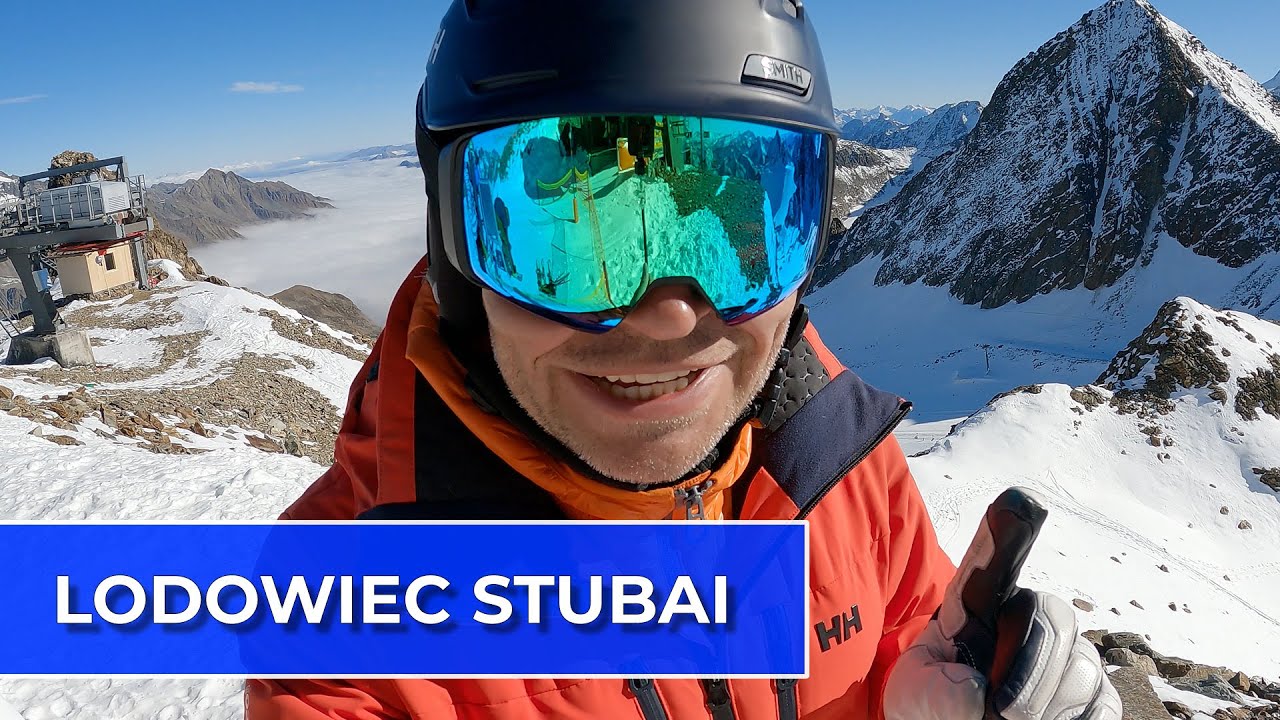
Stubai: the easiest drive from Innsbruck
Stubaier Gletscher is Austria's largest glacier ski area and also the easiest to reach. From the Schönberg exit on the A13 motorway near Innsbruck to the valley station at Mutterberg it is about 30 km of wide valley road, with no hairpins and no tolls.
The 2026/27 season starts here on 9 October, and the autumn rate applies until 23 October: €64.20 a day for an adult, €32.10 for a child. From 24 October the winter price list comes in and the day pass rises to €75.50. On a three-day pass the difference is even clearer: €182.40 in autumn against €214.60 in winter, or €32.20 per person. For two people that is more than €64 just for moving the trip by a few days. In winter, passes of four days or more are also valid at Schlick 2000, Serlesbahnen and Elferbahnen, but on the autumn rate they cover only the glacier.
Of the Tyrolean glaciers, Stubai has the best logistics for families, and the 3S Eisgratbahn takes you up to Eisgrat, at 2,900 m, in a few minutes. For me it is the most 'human' glacier in terms of infrastructure and how easy it is to get around with luggage, children or filming kit.
Getting there. Via Innsbruck, leave the A13 motorway at the Schönberg exit, then follow the Stubaital through Fulpmes and Neustift to Mutterberg. The car park at the valley station is large and free, and the ski pass includes the ski bus that runs along the valley between Schönberg and Mutterberg. This is the only glacier in this round-up that you can reach without tackling a mountain road.
Hintertux: the end of the 365-day legend
Hintertux sold itself for decades on the slogan of 365 days of skiing, and for decades it was true. That ended in July 2025, when the resort halted summer skiing for the first time in its history. We were the first to report it.
Two things need separating here, because the resort's own material blurs them. The Hintertux lifts do run all year and, as tourist infrastructure, are open outside the ski season too. Year-round skiing, however, is no longer guaranteed. In September 2026 the resort reports that skiing is suspended and is planned to resume at the end of the month, if conditions allow.
The 2026/27 winter rate starts here on 3 October, and from that day a day pass costs €82. The unofficial season opening is the Hintertux Park Opening, spread over the weekend of 2 to 4 October, this year in its 22nd edition and for the past two years part of the Rock A Rail series. The Betterpark Hintertux sits at 3,200 m and is the highest snow park in Austria.
Until 2 October the summer rate still applies and a day pass costs €68, which is €14 less. On a trip at the turn of September and October, moving your dates by one day changes the bill more than your choice of accommodation.
From 4 December the same ticket covers the whole Ski- & Gletscherwelt Zillertal 3000, including Eggalm, Rastkogel, Finkenberg, Penken and Ahorn, and so also the pistes above Mayrhofen. In autumn you pay the winter rate for the glacier alone.
Getting there. Take the A12 motorway to the Zillertal exit, then follow the valley through Zell am Ziller and Mayrhofen to Tux and Hintertux. The last 20 km beyond Mayrhofen are a mountain road, narrow in places but kept clear all winter. If you drive via Kufstein, Hintertux is closer than most Tyrolean glaciers. The car park at the valley station at 1,500 m is large, and except on the Park Opening weekend you will find a space without searching.
Kitzsteinhorn: the only published opening date
Salzburg's only glacier. The 2026/27 season starts on 10 October. It is the only one of these eight glaciers to have published a specific date directly on its website, though here too it comes with a caveat about snow conditions.
The autumn price list here is split into two periods. From 10 to 22 October a day pass costs €74 for an adult and €37 for a child. From 23 October to 26 November it rises to €77 and €38.50. From 27 November the Ski ALPIN CARD applies, a joint ski pass with Saalbach Hinterglemm Leogang Fieberbrunn and Schmittenhöhe, on which a day pass at the early season rate costs €74.
In autumn Kitzsteinhorn lives for equipment tests. The Kitzsteinhorn Ski & Board Test falls on 7 to 8 November, the Basecamp Boardtest on 21 to 22 November and the Bergwelten Skitouring Testival on 27 to 29 November. If you plan to replace your board or skis before the season, these are dates to put in the diary.
Getting there. Take the A1 motorway to Salzburg and the A10 south to the Bischofshofen or Bruck exit, then follow the Salzach valley to Zell am See and Kaprun. The Tauern and Katschberg toll tunnels lie further south on the A10, so driving to Kaprun from the north you avoid the section toll. You leave the car at the Gletscherjet 1 valley station in Kaprun, then ride two lift sections to the Alpincenter and from there up to the glacier plateau.

Mölltaler Gletscher: Carinthia's only glacier
The least known of the Austrian glaciers and the only one in Carinthia. It belongs to the Slovak group Tatry mountain resorts, the same company that runs Jasná and Špindlerův Mlýn, so for a skier with GOPASS it is a natural choice.
By early September the resort had still not published its opening date or prices for the 2026/27 season. Two independent industry websites give early October, but differ by a few days, and the official site still shows last season's dates. In the 2025/26 season the glacier ran from 10 October to 31 May, and a day pass cost €69 for an adult and €35 for a child, regardless of the period.
Mölltal is the official training ground of the Austrian, German and Slovak national teams. You can tell from the quality of the grooming and from the fact that some pistes are often reserved for training.
Getting there. Take the A10 motorway via Salzburg heading south, through the Tauern and Katschberg tunnels, leave near Spittal an der Drau and follow the Möll valley to Flattach. From Flattach you drive on to Innerfragant, where you leave the car and ride up on the Gletscherexpress underground funicular. The tunnel brings you out near the Eissee in a quarter of an hour or so. It is an unusual and convenient solution, because it does not depend on what is happening on a mountain road. The toll for the Tauern and Katschberg tunnels is €15 per trip, on top of the vignette.
Val Senales and Maso Corto: the earliest start and an unusually expensive autumn
I return to Maso Corto regularly, and it is a place that is hard to compare with anywhere else in the Alps. The resort sits at the head of the valley at 2,011 m, consists of little more than a few buildings and lifts, and for most of the autumn works as a training base for national teams. It looks completely different from the Austrian glaciers with their infrastructure for the masses.
The 2026/27 season starts on 19 September, the earliest opening of all the resorts in this round-up. The price list divides the year into four periods and, unusually, the first is the most expensive. From 19 September to 6 November a day pass costs €68 for an adult, €34 for a child and €60 for a senior.
From 7 November to 25 December the price drops to €50, and between 26 December and 8 January it rises to €63. Children born in 2017 or later ski for €5 a day if a parent buys an equivalent ski pass. Buying online gives a 7% discount.
Rebuilding of the resort began in April 2023 and was finished two years later. The new Funivia Ghiacciai is 2,150 m long, climbs 1,180 m of vertical in just under six minutes and in places reaches a gradient of 100%. The valley station in Maso Corto, opened in December 2024, has an underground car park with 44 spaces, a restaurant, a bar and a covered walkway from the piste to the lift. The previous lift dated from 1975, so the difference here is bigger than anywhere else in this round-up.
Getting there. There are two sensible options. The first is over the Brenner: Innsbruck, the A13 and A22 motorways via Bolzano to Merano, then along the Val Venosta to Naturno and 35 km up the Val Senales to Maso Corto. The Brenner crossing carries a section toll of €12.50 each way, plus the Italian motorway tolls. The second option is over the Reschen Pass: from Landeck through Nauders and Malles to Naturno, a few dozen kilometres longer, but with no Brenner toll and no Italian motorway. In autumn both work without problems; in winter the Reschen can be awkward when it snows. The last 35 km up the Val Senales are a narrow mountain road with one tunnel and a detour around Lake Vernago.
Driving to the glaciers: vignettes, tolls, tyres
Road charges in 2026 look like this. A 10-day Czech e-vignette costs CZK 300 and a one-day one CZK 230; you buy it through the official system at edalnice.gov.cz. Germany does not charge cars. A 10-day Austrian vignette costs €12.80 and a one-day one €9.60.
On top of that come the special toll sections: the Brenner on the A13 is €12.50, the Tauern and Katschberg tunnels on the A10 are €15, and the Arlberg tunnel on the S16 is €13. All these figures apply to 2026. Price lists are often updated at the turn of the year, so check them again when planning a winter trip.
Winter tyres are a separate subject and in October they can be confusing. In Austria the requirement to use winter tyres or chains applies from 1 November to 15 April, and only in winter conditions, meaning snow, slush or black ice. Formally there is no such obligation in October. In practice you have no business on the Kaunertal glacier road or the Ötztaler Gletscherstraße on summer tyres. In winter conditions extra restrictions or a requirement to use suitable tyres or chains may apply there, so check the current road report before you drive up. In South Tyrol the requirement to carry winter equipment generally applies from 15 November to 15 April on the A22 and in designated areas, while local roads may have their own orders and signage.
One last practical point. All the glaciers have paid or free car parks at their valley stations, but in Kaunertal and Sölden you drive much higher, right up to the lifts. The glacier roads open in the morning together with the lifts and close after the last run, so there is no question of getting to the car park early and changing in peace. In Pitztal, Mölltal and Stubai you leave the car in the valley and carry on by lift, which in autumn is more of an advantage.
Autumn skiing: what to watch out for on a glacier
The first thing is altitude. Skiing in October means skiing only on the upper sections, and these range from 3,029 m on the Kitzsteinhorn to 3,440 m in Pitztal. You get up there from the valley in a quarter of an hour or so, often the day after a long drive. Your body feels it, and it is better to take the first runs easy.
The second is wind. In autumn the weather on a glacier can turn suddenly and violently, and a cable car stops at wind speeds that are barely noticeable down below. In Mölltal and Val Senales, where everything hangs on a single lift, a closure means a day without skiing. At most resorts, bad weather or a partial closure of the infrastructure does not automatically entitle you to a refund; the details are set out in the terms of the specific ski pass.
Training groups get mentioned less often, yet in autumn they can change the character of a whole trip. In Sölden, Pitztal, Mölltal and above all in Val Senales some pistes are often closed for national team training, sometimes the most interesting one. The gentle runs stay open. Resorts publish their piste reservations, so you can check before you go.
That leaves opening hours. Lifts start between 08:00 and 08:30 and finish between 16:00 and 16:30. The day is short, and in the second half of October some high pistes fall into shadow fairly early. The snow is best in the morning, and that is not a slogan but a consequence of how prepared glacier snow behaves when afternoon temperatures rise above freezing.
Autumn skiing: which glacier to choose
For a short October ski trip I would choose Kitzsteinhorn: the opening date has been known for a long time, and before 23 October you pay €74 instead of €77.
The best value in autumn is Stubai between 9 and 23 October. A day pass at €64.20, a six-day pass at €301.80, a drive without a mountain road and a good chance that more than two pistes are already running by then.
If you are after the lowest daily price and are willing to buy online in advance, Kaunertal goes lowest with a pass from €54. There is one condition: you buy blind, without knowing the weather, and you will not get your money back.
Sölden makes sense as a trip to the World Cup on the weekend of 24 to 25 October. For the skiing itself it is then the worst choice of all eight, because the pistes are busy and accommodation costs as much as in peak season.
Val Senales is the choice for someone who wants to ski as early as possible and accepts that, by the resort's own price list, this is the most expensive time of the year. The logic is simple: on 19 September no other resort in this round-up has a piste open yet.
FAQ
Is skiing in Austria in October actually possible? Yes. Seven Austrian glaciers plan to open between the end of September and mid-October. The extent of open pistes depends on the weather and changes from day to day, so check the resort's current report before you travel.
How much does a glacier ski pass cost in October 2026? From €61.50 in Sölden until 14 October and €64.20 in Stubai until 23 October, up to €82 in Hintertux. A six-day pass costs from €266 to €410. Watch out for the threshold in Sölden: from 15 October a day there costs €75 and six days €341.50. In the Kaunertal online shop a day pass goes down to €54, and Pitztal advertises discounts of up to 30%.
Which glacier opens first? Of the resorts in this round-up, Val Senales in South Tyrol, on 19 September 2026. Of the Austrian ones, Sölden opens first on 25 September, with Pitztal and Kaunertal a day later.
Do you need winter tyres in Austria for October skiing? The formal requirement for vehicles up to 3.5 tonnes starts on 1 November and applies in winter conditions. In practice it is better not to drive the glacier roads in Kaunertal and Sölden without winter tyres, because in snow extra restrictions or a requirement to use chains may apply there.
Does the ski pass include the glacier road toll? In Sölden and Kaunertal it does: the road toll is included in the ski pass. If you want to drive up without skiing, in Kaunertal you buy a pedestrian ticket for €55, which already includes the road toll.
How much is the White5 pass for all the Tyrolean glaciers? The price for the 2026/27 season has not been announced yet. In the 2025/26 season the ten-day pass cost €640.