
Zillertal in winter 2026: four resorts, one region and different styles of skiing
The Zillertal is a valley where it is hard to stick to just one resort. Hochzillertal, Zillertal Arena, Spieljoch and the Hintertux Glacier differ in character, altitude and style of skiing, so on a single trip you can change your pace and the way you ski.


For years the Zillertal has been regarded as one of the best organised ski regions in Tyrol. Instead of one huge complex, there are several large resorts here, linked by shared infrastructure and transport but each keeping its own identity. It is in this region, at the Mayrhofen resort, that you will find the Harakiri, considered the steepest groomed piste in Austria, with a gradient of up to 78%, which has long been the benchmark for skiers looking for the ultimate challenge.
Thanks to the variety of the region, a ski day here does not always have to look the same. One day you can choose the fast, well-groomed pistes of Hochzillertal, another day ski long routes in the Zillertal Arena, slow down at Spieljoch or head high up onto the Hintertux Glacier. This set-up works well both for a week-long holiday and for shorter breaks, when flexibility and avoiding a skiing routine matter. On a January trip, skionline.pl tested four of the eight resorts in the region.

Hochzillertal-Hochfügen: 89 kilometres of pistes and sporty skiing
Hochzillertal, linked with Hochfügen, is one of those resorts in the Zillertal that work very well for a longer stay. About 89 km of pistes spread over a large area let you change the character of your skiing during the day, without feeling that you are going round in circles on the same slopes. The resort starts in Kaltenbach, where fast gondolas take skiers high above the tree line, and the upper sections reach more than 2,400 m. This layout matters not only for the views but above all for snow quality and stable conditions through the season.
The upper part of Hochzillertal consists of wide, open slopes dominated by blue and red pistes. Long sections let you ski without frequent stops, and the varied gradient means you can ski each run differently, depending on your pace and ability. This terrain suits skiers who like to ski fluidly, without sudden breaks of slope or bottlenecks. In practice that also means less fatigue over a full day, because the slope does not force you to keep braking and accelerating.
The lower parts of Hochzillertal are more sheltered and gentler, so they naturally attract leisure skiers and families. The pistes are clearly laid out, and the lift network lets you get back to the valley stations quickly without long queues. This is also the part of the resort where the day often ends, after a few hours of skiing higher up, when conditions lower down are still stable.
Once you cross over towards Hochfügen, not only the scenery changes but also the character of the pistes. It is quieter here, with fewer buildings and more space. The pistes have a more technical profile, and the differences in gradient are more pronounced than on the Kaltenbach side. Skiers who want to ski longer and more calmly, away from the crowds, like this part of the resort. Its race pistes mean Hochfügen often serves as a training base, but this does not spoil the leisure character of the other sections.

A big advantage of the whole area is the logistics. Moving between sectors is seamless, with no long transfers and no need to take your skis off. Modern gondolas and chairlifts handle the crowds effectively, even at peak times. As a result, Hochzillertal-Hochfügen copes well during school holidays and weekends, when many Alpine resorts lose their flow and capacity.
Because much of the piste network lies high up and is backed by an extensive snowmaking system, the resort is relatively resilient to poorer winters. At the same time, there is a clear division into zones of different difficulty, so skiers of different abilities can coexist without conflict. It is this balance between a sporty character and easy access for leisure skiers that makes Hochzillertal-Hochfügen one of the most versatile ski resorts in the whole Zillertal.
Zillertal Arena: 150 km of pistes and skiing without repeats
Zillertal Arena is the largest ski resort in the whole valley and one of the areas that best show what skiing "from A to B" really means, rather than just lapping a single slope. About 150 km of pistes link four villages: Zell am Ziller, Gerlos, Königsleiten and Hochkrimml, forming an extensive area that lets you plan the day in many ways without having to come back the same way.
The Zillertal Arena is very varied. The lower sections, especially around Zell am Ziller, offer wide, gentle pistes that suit calm, leisurely skiing. This terrain is popular with families and people who are not looking for steep sections but want to spend a whole day skiing in comfortable conditions. Higher up, around Gerlos and Königsleiten, the pistes become longer and more demanding, and the differences in altitude are more noticeable. Even so, the skiing here is very pleasant, because the pistes are very wide.

One of the Zillertal Arena's greatest strengths is continuity. Long runs between sectors let you spend several hours skiing without stopping in the same place. It is a resort where the ski day naturally divides into stages, with breaks at mountain huts scattered across different parts of the area. As a result, skiing is not just a matter of repeating the same pistes, and the changing scenery gives you a sense of travelling across the whole region.
The Zillertal Arena also copes well with larger crowds. A large number of modern lifts and wide pistes mean that even at peak times it feels less crowded than smaller, popular resorts.
Another important part of the Arena is what it offers beyond the classic pistes. There are snow parks, scenic runs and sections that suit a more relaxed pace. At the same time there is no shortage of sportier stretches, with steeper gradients and a bigger vertical drop. So the Zillertal Arena is not a one-dimensional resort but a place where you can freely change your style of skiing during a single stay.
This is terrain that works best for a trip of several days. The size of the resort lets you avoid a skiing routine while still giving a sense of good organisation. The Zillertal Arena is for those who want to ski long, ski a lot and ski in variety, without having to wonder every day whether there will be "anywhere to go".
Hintertux: glacier, altitude and a trip underground into the Spannagelhöhle
The Hintertux Glacier is the harshest and at the same time the most distinctive part of the Zillertal. Located at the end of the valley, it offers about 60 km of glacier pistes, open almost all year round, which is still an exception even by Alpine standards. Skiing here starts much higher than at the other resorts in the region, and the upper sections reach more than 3,250 m, which means stable snow conditions even when lower resorts are only just getting going or the season is slowly coming to an end.
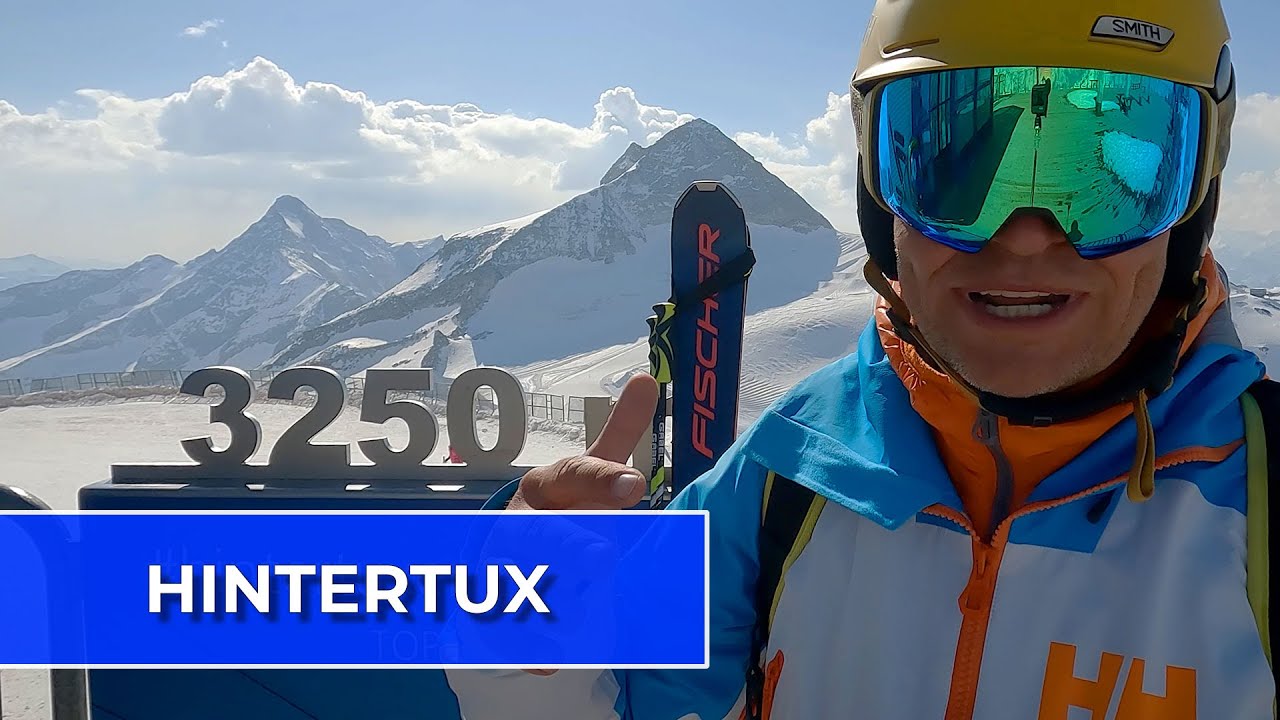
Skiing at Hintertux has a different rhythm from Hochzillertal or the Zillertal Arena. The pistes are wide and run across open terrain without the shelter of trees, so the weather matters more here. In good weather the glacier gives you plenty of freedom and very good conditions for working on technique, especially on long, even sections. It is no accident that Hintertux is often used by national teams and sports clubs for pre-season training.
The piste layout favours intermediate and advanced skiers, but there are also easier options that let you get used to skiing on a glacier. A characteristic feature is the long runs between successive lift levels, which give you a sense of the altitude and the scale of the terrain. It is skiing that demands more fitness, but it is very rewarding for people who value snow, space and Alpine ruggedness.
What sets Hintertux apart from other glaciers in the Alps is the chance to go beneath the surface of the ice. Right next to the pistes is the Spannagelhöhle, one of the largest accessible glacier caves in Europe. Tours are guided and lead through natural passages, chambers and crevices formed inside the glacier. It is an experience that completely changes your perspective, because it lets you see what a glacier looks like "from the inside", far from the pistes and the open terrain. It is not, however, an adventure for anyone with even mild claustrophobia, as the passages can be really narrow.
Hintertux is not a resort for every day of your trip, but as part of a stay in the Zillertal it works superbly. It gives you access to snow whatever the conditions in the valley, offers high-altitude skiing and experiences you cannot repeat in classic resorts.
Spieljoch: relaxed skiing above Fügen
Spieljoch is the smallest of the Zillertal's main resorts and also the one that stands furthest from the Alpine scale of Hochzillertal or the Zillertal Arena. It has about 21 km of pistes directly above the village of Fügen, which makes Spieljoch an easily accessible and convenient choice for a shorter ski day or a slower pace during a longer stay in the valley. Families with children will also appreciate this resort.
The pistes here are mostly for leisure skiing. Blue and red runs dominate, laid out over more compact terrain than at the higher resorts. The skiing is calmer and the gradients moderate, which suits families, people returning to skiing after a break, or those who want to slow down after a few intense days. Spieljoch does not focus on long pistes or a big vertical drop, but on a fairly simple layout and easy orientation.
The offer is rounded off by a snow park that fits the resort's leisure character. The park was designed to be accessible to a wide range of skiers and snowboarders, not just advanced riders. It has smaller kickers, boxes and features that let you try the basics of freestyle without pressure or excessive risk. It is a good place for first attempts or as a break between classic runs.
Some of the pistes run through the forest, which makes skiing more comfortable in poor weather. In snowfall or poor visibility, Spieljoch tends to be more predictable than the open high-mountain terrain of the glacier or Hochzillertal. In such conditions the snow park also stays easy to read and safe to ride, which less experienced users will appreciate.
Agnieszka Kaszuba / skionline.pl