
SKI plus CITY Pass Stubai Innsbruck: 12 resorts plus the city of Innsbruck
A six-day Stubai Skipass, valid on the glacier and in the valley's three other resorts, costs €355 in the 2026/27 main season. A six-day SKI plus CITY Pass costs €386 and covers the same four resorts plus eight more, ski buses, attractions in and around Innsbruck and a swimming pool. The difference is €31 over six days, or just over €5 a day.


For that extra money you get access to 12 resorts instead of four, and the combined length of pistes and ski routes nearly triples. Even so, at first glance it is not obvious how to actually use the SKI plus CITY Pass.
I have skied every resort in the system, some of them many times and with this very pass in my pocket. Bergeralm too, which dropped out of the system a few seasons ago. Below is everything worth knowing before you buy: the rules, prices for the 2026/27 season, profiles of the 12 resorts, getting between them and the extras beyond skiing.
How does the SKI plus CITY Pass work?
The setup is simple, but there are a few rules worth knowing before you buy. The pass is sold only for consecutive days. There is no “5 days out of 6” option of the kind familiar from the Stubai Glacier's own price list. Nor is there a day pass. The shortest option covers two days, the longest 21 days.
There is no season pass either. The product is designed mainly for guests spending their holiday in the Innsbruck and Stubaital region, not for people who ski here all winter.
The pass is issued on a single-use card with no deposit and may not be passed on to anyone else. For reduced fares you must carry photo ID. Being checked without a valid pass can mean a surcharge and having to buy the right ticket.

You can use the ski resorts without limit for the whole validity of the pass, provided of course they are open at the time. The city attractions included in the offer can be used once each. The StuBay pool in Telfes is also a single visit, for up to four hours.
The pass can be bought online, at Innsbruck Tourismus sales points, from partners (including selected hotels) and at the ticket offices of the 12 participating resorts. The current Innsbruck Tourismus website lists all 12 lift companies, so earlier reports that it was not on sale at Nordkette should be treated as out of date.
How much does the SKI plus CITY Pass cost in 2026/27?
The official price list for the 2026/27 season covers the period from October 2026 to April 2027. Innsbruck Tourismus has already published the full fares, from two up to 21 consecutive days.
| Number of days | Adult | Child | Youth | Senior |
| 2 days | 162 € | 81 € | 113 € | 138 € |
| 3 days | 223 € | 112 € | 156 € | 190 € |
| 4 days | 274 € | 137 € | 192 € | 233 € |
| 5 days | 332 € | 166 € | 232 € | 282 € |
| 6 days | 386 € | 193 € | 270 € | 328 € |
The price list runs all the way to 21 days, but for a typical week-long trip the upper end is the most interesting. The increase on last winter is fairly even, at about 5%. Six days went up from €368 to €386, four from €261 to €274 and two from €154 to €162.
For a week's trip the six-day option is the one most of us will want. It works out at €64.33 a day. That is less than a single day pass for the Stubai Glacier in the main winter season.
The comparison with the Stubai Skipass, which is valid on the glacier, at Schlick 2000, Serlesbahnen and Elferbahnen, is even more interesting.
| Ski pass, 2026/27 main season | 4 days | 5 days | 6 days |
| Stubai Skipass: 4 resorts | 267,90 € | 312 € | 355 € |
| SKI plus CITY Pass: 12 resorts | 274 € | 332 € | 386 € |
| Extra cost | 6,10 € | 20 € | 31 € |
It is worth stressing that the Stubai Skipass prices given apply to the main winter season. Lower fares apply to it in autumn and spring.
Over four days the difference between the two products is just €6.10. For that you get skiing in eight more resorts, transport and a package of attractions beyond skiing. It is one of the more interesting cases in the Alps where a wider ski pass costs only slightly more than the regional product.

Discounts and the birth-year trap
Age categories are based on year of birth, not on exact age on the day of purchase.
Children born in 2019 or later ski free when accompanied by a paying parent. They are issued a separate “child free” card.
Those born from 2012 to 2018 pay the child fare, about half the adult price. Those born from 2008 to 2011 count as youth and pay about 30% less.
Those born from 1948 to 1961 get the senior fare. Those born in 1947 or earlier get an even bigger discount, close to half the adult price.
People with a certified disability of at least 60% move down a price category: adults and seniors pay the youth fare, youths pay the child fare, and children ski free. The discount does not extend to an accompanying person.
For groups, there is one free pass for every 20 paying people.
Which resorts does the pass cover?
The system currently covers 12 resorts, with a total of 265 km of pistes plus 49 km of ski routes, and 108 lifts.
Only a few seasons ago there were 13 areas, with Bergeralm in Steinach am Brenner closing the list. Bergeralm has since left the system. Older information about 13 resorts, 308 km of pistes and three pools can still be found online, so when planning a trip, check the date of what you are reading.
| Resort | Altitude | Pistes | Lifts |
|---|---|---|---|
| Stubaier Gletscher | 1,697 to 3,210 m | approx. 65 km | 26 |
| Kühtai | approx. 1,970 to 2,520 m | approx. 46 km | 12 |
| Hochoetz | 820 to 2,300 m | approx. 41 km | 13 |
| Axamer Lizum | 1,560 to 2,340 m | approx. 40 km | 9 |
| Schlick 2000 | 1,000 to 2,240 m | approx. 29 km | 11 |
| Glungezer | 950 to 2,304 m | 23 km | 7 |
| Patscherkofel | 1,009 to 1,965 m | 19 km | 7 |
| Muttereralm | 960 to 1,887 m | approx. 16 km | 5 |
| Nordkette | 860 to 2,256 m | approx. 13 km | 6 |
| Rangger Köpfl | 820 to 1,939 m | 9 km | 5 |
| Elferbahnen | 1,000 to 2,100 m | approx. 7 km | 5 |
| Serlesbahnen | 952 to 1,641 m | approx. 6 km | 4 |
The piste length given by the SKI plus CITY Pass operator and by the individual resorts is not always the same. Rangger Köpfl is a good example: the resort's official website gives 9 km of pistes, while some SKI plus CITY Pass materials quote 17 km. In such cases, check exactly what has been counted.

Stubaier Gletscher is the backbone of the whole system and the area with by far the longest season. The highest point is at 3,210 m, and one of the resort's symbols is the 3S Eisgratbahn, with cabins designed in collaboration with Pininfarina. There is also the 10 km Wilde Grube ski route, which I count among the most interesting long descents in this part of Tyrol. In autumn, when most of the other areas are not yet running, the glacier is the main reason to buy the pass.
Axamer Lizum is the one I know best, and I consider it one of the strongest resorts in the whole system. Innsbruck locals call it their “white roof”, a nod to the famous Golden Roof in the city centre. Red and black pistes dominate, there is extensive freeride terrain, the Golden Roofpark and an Olympic history going back to the 1964 and 1976 Games. The ten-seater Hoadlbahn takes you from the car park up to 2,340 m in about six minutes.
Kühtai has one huge advantage: altitude. The village itself sits at about 2,020 m, so it is my choice for days when conditions in the lower resorts start to deteriorate. The pistes run practically down to the hotels. Downsides can be wind on the ridges and the rather particular character of the village, which feels more like a built-up mountain pass than a classic Tyrolean village.
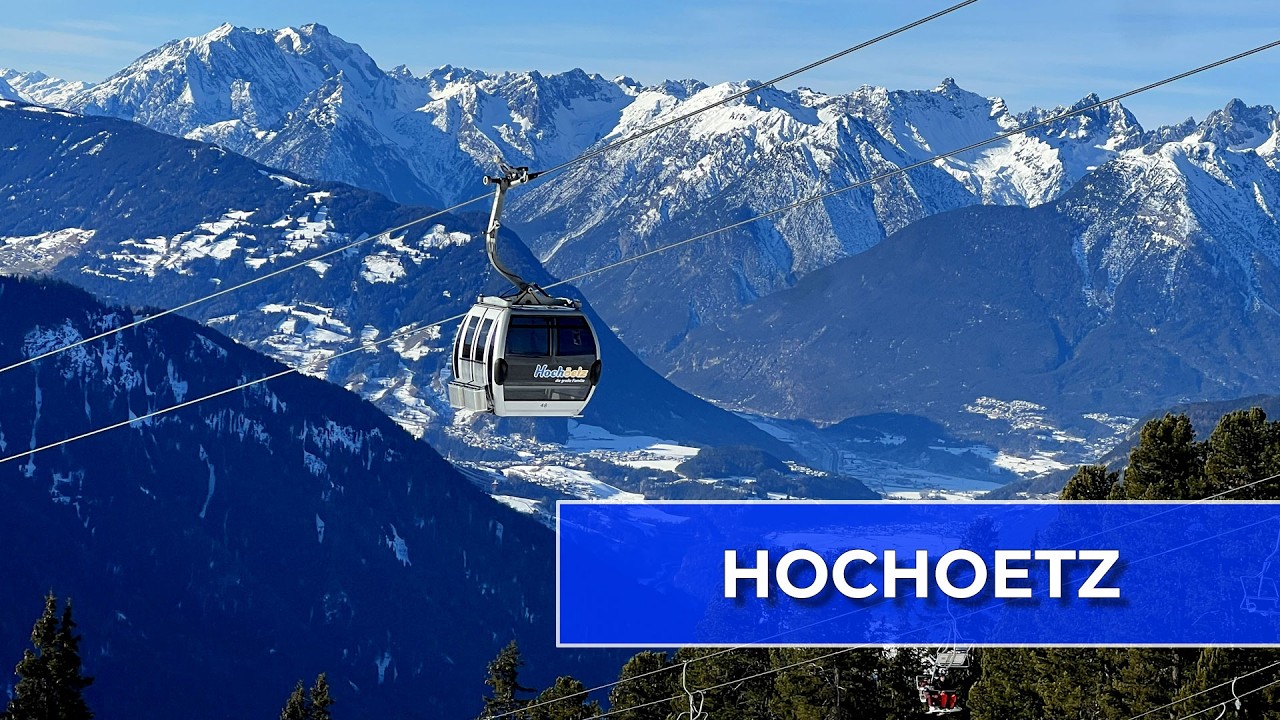
Hochoetz is its warmer and much more family-oriented neighbour. The resort puts a strong focus on families with children and on beginners, but it is not limited to easy pistes. It is good terrain for a quieter day and one of the better choices for families who want to combine several resorts during one stay.
Schlick 2000 above Fulpmes is the most sociable resort in the Stubai Valley and, in my view, one of the best compromises in the whole system between the size of the area and its atmosphere. The Kalkkögel rising above the pistes really do look in places like the Dolomites moved to Tyrol.
Elferbahnen and Serlesbahnen are in a different category. These are small areas where skiing exists alongside a very important tobogganing offer. I see them more as a good way to round off a day or an evening than as the main goal of a full day out.
Nordkette is a case of its own. It is a small ski area, but also one of the most spectacular places around Innsbruck. The lift starts practically in the city centre and quickly takes you to over 2,200 m.
The Hafelekar-Rinne, with gradients of up to 70%, is one of the steepest marked ski routes in Europe. I have skied Nordkette several times and each time came to a similar conclusion: it is a superb place for a few hours, especially in good weather, but not necessarily terrain for a full day of hard skiing. The view from Seegrube over Innsbruck, more than 1,300 metres below, is exceptional, though.
Patscherkofel, Muttereralm, Rangger Köpfl and Glungezer form a ring of smaller resorts around Innsbruck, and each of them has a slightly different character.
In my opinion the most underrated is Glungezer: it has a long run down towards the valley, usually far fewer skiers than the best-known resorts, and from the 2026/27 season it is due to get a new lift to Schartenkogel.
Patscherkofel is Innsbruck's Olympic mountain, linked to the 1964 and 1976 Games. Today blue and red pistes dominate, and one of its biggest assets is the long run from the top station down towards the valley.
Muttereralm is above all a small family resort, well suited to learning to ski and to relaxed skiing.
Rangger Köpfl, on the other hand, is closely tied to tobogganing. Three connected sections give more than 10 km of runs in total, and much of it is also open in the evening.
How do you get between the resorts?
This is the most important thing to understand before buying this pass. None of the 12 resorts is linked to another by pistes. Every change of area means a trip by car or by public transport. That is the basic difference from areas such as SkiWelt or Sellaronda, where you can ski from one sector to the next without taking your skis off.
The SKI plus CITY Pass covers ski buses and the Sightseer tourist bus in Innsbruck.
Public transport in the Stubaital changed a great deal in 2026. Since 2 May a new network has been running, with lines 590, 591, 592 and 593, which link Innsbruck with the villages of the valley and the Stubai Glacier. In the main winter and summer seasons their timetables are arranged to give a combined service to the glacier roughly every 15 minutes. Outside the main season services are less frequent.
This is an important change, because older materials describing a single line 590 and far less frequent services no longer reflect the current situation.
Many of the other areas around Innsbruck can also be reached by public transport. Still, check the specific line numbers and timetables just before you travel, as the network is updated between seasons.
There is a separate connection between Ochsengarten and Kühtai. Thanks to it, Hochoetz and Kühtai can be treated as two resorts that can be combined in a single day, even though they are not linked by lifts or pistes.
A plan to link the two areas via the Schafjoch was dropped a few years ago, so do not expect a ski circuit to appear, at least for now.
In my experience, the SKI plus CITY Pass works perfectly well without a car, especially with a base in Innsbruck or in a well-connected part of the Stubaital. You just need to plan your day around the timetables.
A car obviously gives you much more freedom. Most resorts are within a few dozen minutes' drive of Innsbruck. Good bases include the city itself and villages such as Götzens, Mutters or Fulpmes, depending on which areas you want to visit most often.

What extras does the SKI plus CITY Pass offer beyond skiing?
This is where the offer clearly sets the SKI plus CITY Pass apart from most big Alpine ski passes. Besides the 12 ski resorts, the current offer includes 23 attractions in and around Innsbruck. Each can be used once.
The list largely overlaps with what the Innsbruck Card offers. It includes Swarovski Kristallwelten in Wattens, Ambras Castle, the Bergisel ski jump, the Alpenzoo, the Hofburg, the Golden Roof Museum, the Hofkirche, Tirol Panorama and several other museums and attractions in the region.
Official materials still sometimes disagree on the number of attractions (you can find both 22 and 23), so check the current list before you go. The main SKI plus CITY Pass website for the 2026/27 season currently uses the figure of 23.
On top of that comes StuBay in Telfes: one entry for up to four hours. Older materials still mention three pools, but that no longer describes the current offer.
SKI plus CITY Pass holders also get 25% off selected evening tickets at participating resorts. This covers both night skiing and tobogganing. The specific days and times change between seasons, so here too it is worth checking the current programme before you travel. On top of that come the ski buses and the Sightseer in Innsbruck.
What is new for 2026/27?
The most important investment among the resorts in the SKI plus CITY Pass is on Glungezer. The old Schartenkogel chairlift is being replaced by a modern detachable six-seater with bubble covers and heated seats. The valley station is being built near the existing Kalte Kuchl station, and the top station at Schartenkogel. Once the new lift is running, the ride should take about seven minutes and the resort's piste length should grow from 23 to 24 km. The investment is worth about €13.5 million.
This is no longer a project waiting for administrative decisions. The building permit became final at the beginning of July 2026 and construction has started. The operator keeps a construction diary on its website, and the new lift is being prepared for the 2026/27 winter season. No lift investments on a comparable scale have been announced at the system's other resorts for this winter.
Who is this pass for, and who is it not for?
It makes sense if you are coming for a week and like to switch areas. The biggest winner is someone who really uses the variety of the system: the glacier one day, Axamer Lizum the next, then Kühtai, Schlick 2000 or Glungezer. For families it means being able to match the resort to the needs of the moment. One day you can pick family-friendly Hochoetz or Muttereralm, another head to the glacier or to Axamer Lizum. It also works well for couples or families where not everyone wants to ski every day. The Innsbruck attractions package means the pass is no longer just a lift ticket.
Seasonality is worth bearing in mind, though. The fact that the pass covers 12 areas does not mean they are all open from October to April. In autumn the glacier plays the main role, and the other resorts join as winter arrives. At the end of the season the situation reverses.
It does not make sense if you are looking for one big, linked area and want to click into your skis outside your hotel in the morning and take them off only in the afternoon a few dozen kilometres away. The SKI plus CITY Pass requires you to move around. That is its drawback, but also the very essence of the product.
Nor am I convinced about buying it for a very short stay. Two days cost €162, or €81 a day. That is by far the worst rate in the whole price list, and in two days it is hard to make use of both the variety of resorts and the city offer.
The six-day option seems the most logical to me. My plan for a week would look like this: two days on the Stubai Glacier, two at Axamer Lizum, one day at Kühtai or Hochoetz and one on Glungezer. Nordkette can be saved for an afternoon of good weather, and one of the evenings set aside for tobogganing. That gives six days of skiing in several completely different areas: from a glacier above 3,000 m, through Olympic Axamer Lizum, to the low-key Glungezer. It is in this variety that I see the greatest value of the SKI plus CITY Pass.
Frequently asked questions
Can you buy a SKI plus CITY Pass for one day?
No. The shortest option covers two consecutive days. For a single day you need to buy a ticket for a specific resort.
Do the days have to be consecutive?
Yes. The pass is valid for consecutive calendar days. There is no option that lets you choose, for example, five days of skiing out of six.
Is there a season pass?
No. The longest option covers 21 days.
Are ski buses included?
Yes. The SKI plus CITY Pass covers the ski buses linked to the offer and the Sightseer in Innsbruck. Since May 2026 the Stubaital has had a new network of buses 590 to 593, so use the current VVT timetables before you travel.
Is Bergeralm still part of the pass?
No. The system currently covers 12 resorts. Materials listing 13 areas are out of date.
How much does the SKI plus CITY Pass cost for a week?
The six-day option, the most common choice for a week's stay, costs €386 for an adult, €193 for a child, €270 for youth and €328 for a senior in the 2026/27 season.